

Today, on the International Day of Women and Girls in Science we highlight our AMGC Early Career Researchers, a group of remarkable women shaping the future of science everyday through their dedication, intelligence and hard work. Our Archaeology, Environmental Changes & Geo-Chemistry (AMGC) Research Group, at Vrije Universiteit Brussel tackles a diverse array of research questions; from investigating the origins of micrometeorites, to finding past human mobility, diet and landscape use, examining environmental pollution, and interrogating the archaeobotanical record.
We love science and the research we do. Here are some of the questions that drive us, and why they inspire us to keep pushing boundaries every day.
Dr Jolantha Eschrig - Astrophysicist and Planetary Scientist
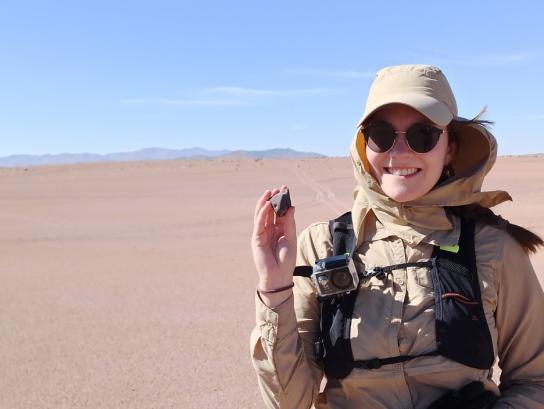
What I like about physics is how logical it is, you can explain so many things by simply understanding some universal rules. And what bigger questions are there to answer besides how our Solar System evolved and how life was made possible on Earth. Meteorites are fascinating not only because they allow us to answer those questions but also because they let you touch a piece of space. They are literally remnants of the building blocks from which everything we see around us (including ourselves) are made of.
Read Jolantha Eschrig's latest work here inventorying thousands of meteorite specimens from Switzerland: https://onlinelibrary.wiley.com/doi/full/10.1111/maps.14361
Hannah Leonard - Archaeologist
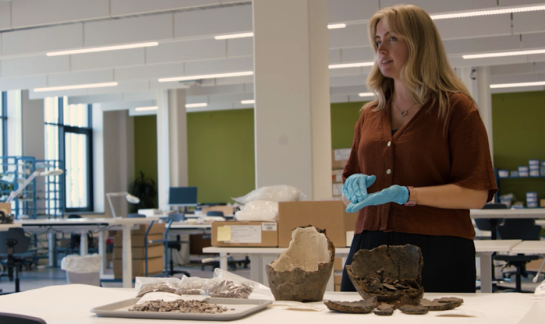
What I love most about my research is being able bring together all of the interdisciplinary approaches that I work with and piece them together like a puzzle. It’s amazing to try and understand the daily lives of regular people who lived thousands of years ago. By studying isotopes within human remains and combining this with archaeology in my PhD, I can start to see what people were eating, how they connected with the landscape, as well as one another, and also their thoughts about death. As part of the LEAP project, this extends even further to how communities reacted to and dealt with climate change events.
Read more about the LEAP project here: https://www.leap-belgium.be/project/ and keep an eye out for Hannah Leonard's work in the Lunula journal later this month!
Emma Legrand - Bioarchaeologist
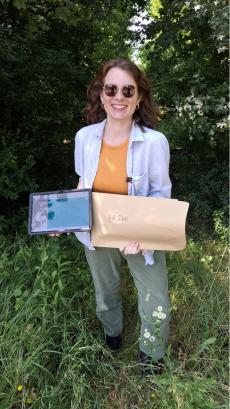
My PhD project focuses on reconstructing past mobility patterns, but also land-use strategies, using strontium isotopes. With case studies from Belgium, Croatia and Peru, I am also getting to understand how the landscape might have affected movement for past populations, and to see if this can be reflected in the isotopic signatures integrated in the skeleton. I’m a curious person and a past enthusiast, so getting to investigate the specific and everyday life aspects of archaeological populations is a perfect combination. What I like in my work is the entanglement between biology, archaeology and landscape, and getting to experience these various aspects in the lab and on fieldwork. The insights we can get on past people are truly amazing, and I am constantly surprised at how much information we can get out of interdisciplinary studies!
Want to learn more about how isotopes tell us about landscape use? Read Emma's recent paper here: https://doi.org/10.1016/j.jasrep.2025.105371
Dr Monica Alonso Eguiluz - Microarchaeologist
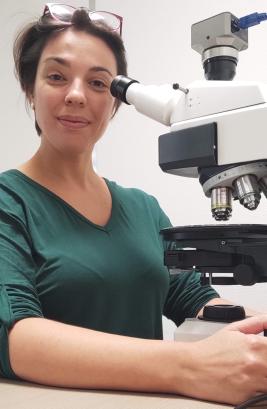
As a microarchaeologist I study the archaeological record not visible to the naked eye. My specialty - phytolith analyses - allows me to study a vast array of archaeological contexts, from prehistory to more contemporaneous periods. What I enjoy of my research is that I can combine elements from botany and geology, which makes me learn of many other fields of expertise and to apply different disciplines to the study past societies, in particular their relationship with plants.
Check out Monica Alonso Eguiluz's work on comparing approaches to understanding urban Dark Earths: https://journals.plos.org/plosone/article?id=10.1371/journal.pone.0320122
Charlotte Van Riet - Medieval historian and (Bio-) Archaeologist
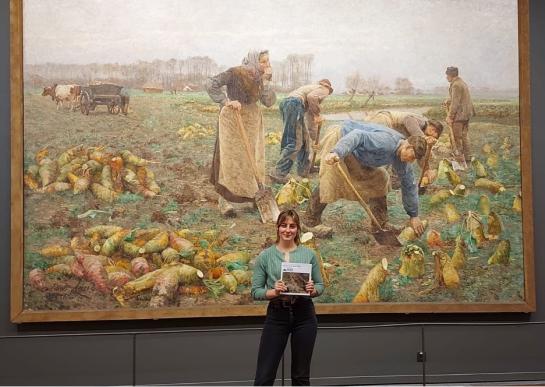
The Middle Ages: Cold, dark and boring? How about lively, dynamic and endlessly fascinating! During the Middle Ages, Northwestern Europe was shaped by rapid urbanisation, demographic growth, migration and trade. Along these processes, a large network of cities and towns emerged. In my PhD, I investigate who the earliest inhabitants of these urban environments were; where they came from, which socio-economic groups they belonged to, and how they shaped their earliest urban environments. I approach these questions by bridging the domains of history and bioarchaeology. One of the many things I love about my work is sharing these past stories with a broader audience and revealing the richness and complexities of our medieval past.
Check out Charlotte Van Riet's work in Wonderkamer's issue on the Middle Ages: https://wonderkamermagazine.nl/magazines/
Fien Jonckheere - Planetary Scientist
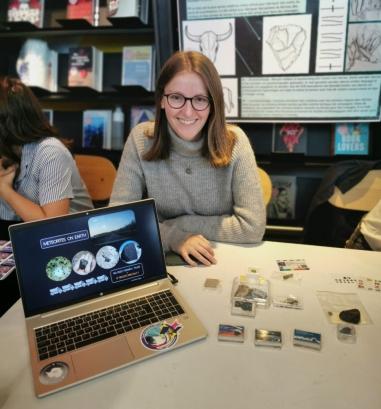
What I love about my research on micrometeorites is that I get to study particles from outer space. These tiny microscopic grains fall to Earth every day, and could easily be overlooked. It’s beautiful how these small particles help us understand the evolution and composition of our Solar System. I also work on fossil micrometeorites, a relatively young field where there’s always more to discover. Every new sample can reveal something surprising. Beyond research I love teaching geology and participating in outreach events. I especially like working with young people, hoping to inspire them and learn them something about this very specific yet truly amazing research field.
Take a look at Fien Jonckheere's recently published Masters research on biostratigraphy: https://jm.copernicus.org/articles/44/319/2025/
Rosie Campbell – Digital and landscape archaeologist
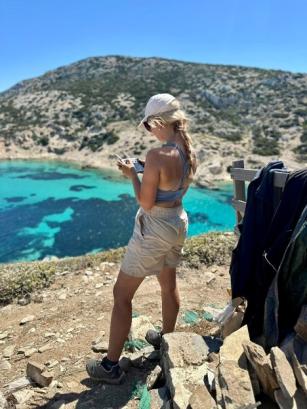
As a digital and landscape archaeologist, I use a myriad of tools to help reconstruct ancient landscapes, detect sites, and preserve archaeology. Sometimes this looks like weeks of fieldwork surveying remote and beautiful areas, though mostly it's a lot of lab work processing the results. My main research over the last ten years has focused on the Aegean islands, but I have also worked on projects based across the globe including in Australia, Pakistan, India, and Botswana. I love the way the tools and methods in my research have many different applications - from working on 3D reconstructions of Early Bronze Age architecture, developing a 3D GIS of a site, working on digital storytelling using geospatial data to better engage with the public, to using Machine Learning and AI to predict where archaeological sites may be.
Interested in the 3D mapping of archaeological sites? Read Rosie Campbell’s recent research on the Greek island of Keros here: https://doi.org/10.1016/j.jasrep.2025.105522
Dr Anna Karligkioti - Bioarchaeologist
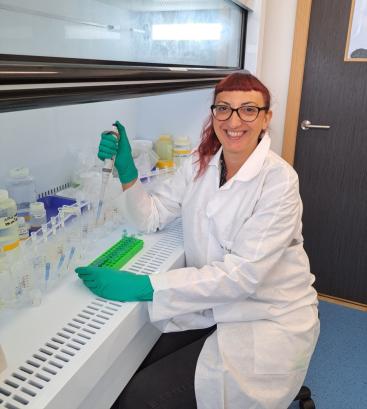
What I love about my research is uncovering the everyday lives of people from the past through their bones. As a bioarchaeologist, I combine skeletal and chemical analyses to explore mobility, health, diet, labor, and inequality. I have studied ancient Greek communities during times of social change aiming to shed light in the lives of common people. Beyond research, I enjoy public outreach, because it is important to share knowledge and past lives help us understand what makes us human in the present too.
Interested in learning more about people’s life in ancient Thebes? Read Anna Karligkioti’s recent work here: https://doi.org/10.1002/oa.70055 and https://doi.org/10.1016/j.jasrep.2025.105196
Amanda Sengelov - Archaeological scientist
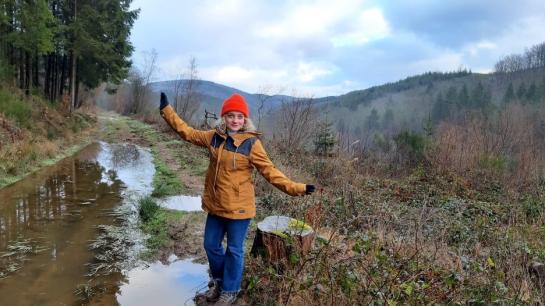
What I enjoy most about my research is connecting chemistry with archaeological and environmental questions to understand how people, animals, and environments were connected in the past, and how those connections shape the present. By studying how strontium moves from soil to plants and into human and animal tissues - through field sampling, controlled experiments, and spatial mapping - I explore how landscapes, environmental processes, and human impact influence the chemical signatures we find in plants. I especially enjoy fieldwork, from sampling modern plants to working on archaeological sites and with human and animal skeletal material, as well as exploring Belgium’s surprisingly diverse landscapes while doing so.
Read about Amanda Sengeløv's recent work mapping strontium variation across Belgium here: https://www.sciencedirect.com/science/article/pii/S0016706124003525
Meihui Li - Archaeological micromorphologist
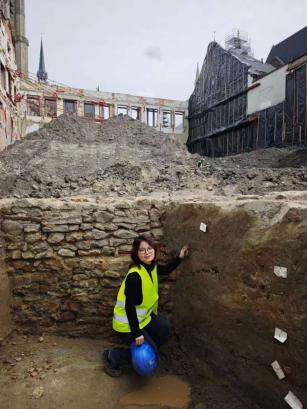
I am 🔬 decoding Urban Dark Earth—a stratigraphically complex archive of urbanisation. What I enjoy about my research is being a generalist of this micro world and then a storyteller of urban soils. 🌍 To accomplish my research mission, I am also taking on the following roles:🔍 Detector: Spot micro-evidences (minerals, shells/eggshell, plants, charcoal, slags, coprolites, ash, mortar, daub) in thin sections. 📜 Interpreter: Help urban soils tell about their formation processes and the human activities involved. 📖 Weaver: Synthetise micro-stratigraphic data into site biographies—tracing how soil layers document land-use changes, daily practices, and urban development. From urban soils to city stories 🌆: I am building up comprehensive narratives where soil science meets human history.
Check out Meihui LI's research profile to find out more about her project, and follow for updates on the research here: https://researchportal.vub.be/en/persons/%E7%BE%8E%E6%85%A7-%E6%9D%8E/
Solène Chevallier – Bioarchaeologist
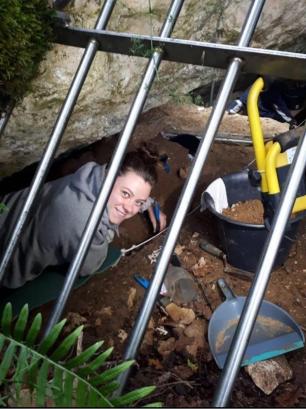
As a bioarchaeologist, what I love most about my research is how detailed our understanding of past societies can be. Isotope analysis helps reveal invisible stories, including land-use strategies, mobility patterns or dietary practices. The precision that can be reached by combining archaeological, anthropological, and isotopic approaches still amazes me.
Check out Solène’s research using isotopes to investigate Bronze Age land management here: https://doi.org/10.1016/j.jas.2026.106474
Dr Lisa Krämer Ruggiu – Cosmochemist and Planetary scientist
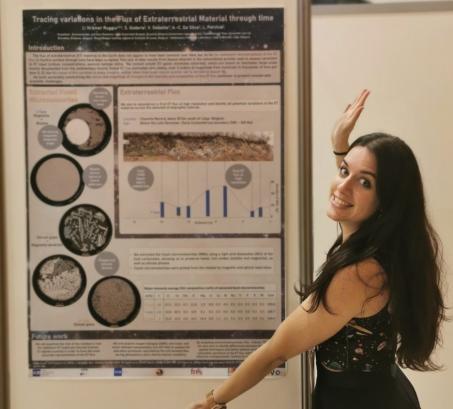
What I love about my research is that it connects Earth, asteroids, and meteorites through pieces of cosmic material. I study micrometeorites and meteorites to understand what they reveal about the evolution of the Solar System. I also investigate how the flux of cosmic dust to Earth has potential links with past environmental changes on our planet. In parallel, I work on linking meteorites to their parent asteroids, especially in the context of space missions, to help choose better targets for future space exploration. Beyond research, I truly enjoy teaching, supervising students, and sharing scientific curiosity, because for me, science is not only about data, but also about transmission, discussion, and inspiring the next generation.
Micrometeorites are cool, read Lisa Krämer Ruggiu’s latest research on the diversity of fossil micrometeorites here: https://doi.org/10.1016/j.gca.2025.07.016
Anneminne Frère - Archaeologist and Sociologist
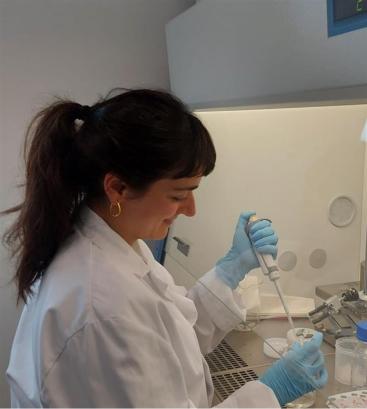
What I love about my research is bridging the past and the present to better understand how societies deal with death. Using bioarchaeology and geochemical methods such as infrared and isotope analysis, I study ancient cremated human remains to explore who was cremated and how. At the same time, I visit modern Belgian crematoria and talk to people living in Flanders to investigate contemporary cremation practices and preferences. I enjoy combining lab-based research with observations and conversations, and exploring how insights from past cremation practices can inspire the ways we think about funerary rituals and deal with loss today.
Read more about the archaeology side of Anneminne Frère's research in her paper on reconstructing life histories: https://onlinelibrary.wiley.com/doi/10.1002/ajpa.70058
Dr Danaé Guiserix - Geochemist and a mix of anthropo/archaeo/primato-logist!
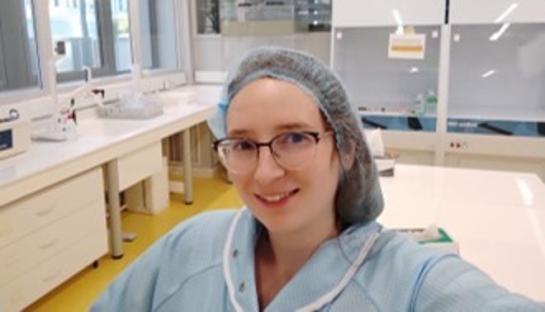
What I enjoy the most about my research is finding new ways to explore the past (and even the present!) with isotopes and chemistry. I love the thrill of waiting for values to appear on the mass spectrometer, after I spent so much time preparing the samples for analysis. Of course, technical issues can make it harder sometimes, but solving it is part of the fun! After spending quite a lot of time analysing their teeth, I have developed a soft spot for primates 🐒🙈There is so much we still don't know about them, and I hope I can contribute to put them in the spotlight 💫
Read about how Danaé Guiserix-Hariot’s work can be applied to understanding Neanderthal’s diet here: https://doi.org/10.1016/j.jhevol.2025.103747 and if you’re keen for more read her PhD thesis here: https://theses.fr/2024ENSL0101 !
Rosalie Hermans - Archaeobotanist
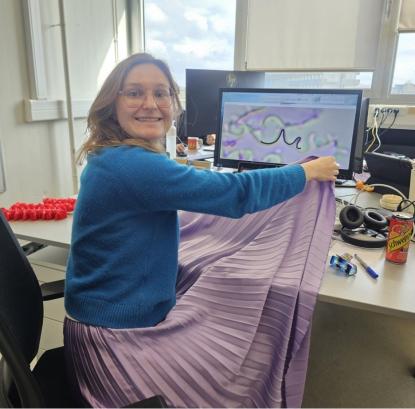
What I love about my research is how much information about plants is hidden at a microscopic scale. Plants produce tiny mineral 3D structures called phytoliths that can survive for thousands to millions of years. By analysing their shape, we can reconstruct past vegetation and learn what people ate and how they used plants. In my PhD, I studied phytoliths from crops like wheat, barley, rye, and oats. I’m always amazed by the diversity and beauty of their shapes. Here, I’m doing analysis on a microscopic image of a phytolith.
Learn more about how researchers can identify crop domestication through identifying phytoliths in Rosalie Hermans' work here: https://www.frontiersin.org/journals/plant-science/articles/10.3389/fpls.2025.1643447/full
Delphine Vandeputte - Environmental chemist
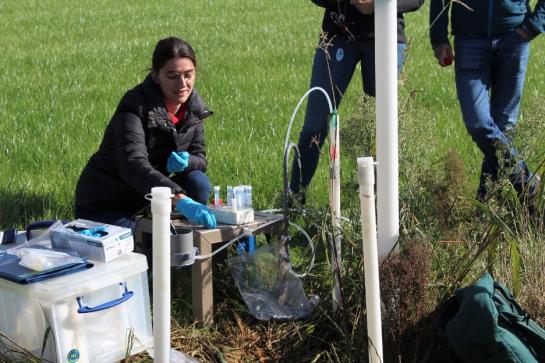
Through my research, I gain a deeper understanding of environmental processes. What excites me the most is applying this knowledge with my colleagues in the GROW project, to safely reuse of treated wastewater in agriculture, contributing to solutions for future droughts and water scarcity.
Read more about Delphine Vandeputte's work on sustainable water management with the GROW project here: https://press.vub.ac.be/kan-afvalwater-helpen-tegen-droogte
Dr IJk van Hattum - Physical Anthropologist
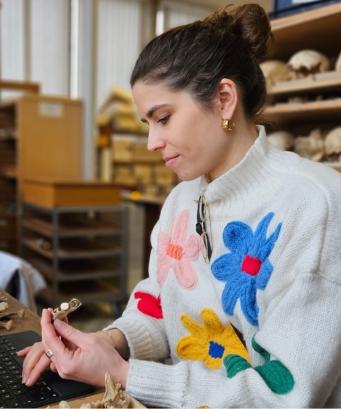
As a physical anthropologist, I study the human past through skeletal remains - specifically through dental anthropology and isotopic analysis. My FWO-funded project Proximeuse focuses on subsistence, biological relatedness, and mobility patterns of Late Neolithic communities (3700–2000 BC) in the Belgian Meuse basin. I enjoy the diversity of the job: from archaeological fieldwork to analysing prehistoric teeth, labwork for isotope ratio analysis, and of course lots of writing! I love that with my work I get to explore fascinating questions about our prehistoric past.
Learn more about subsistence and behavioural variation in Neolithic people in IJk van Hattum's work here: https://onlinelibrary.wiley.com/doi/full/10.1002/ajpa.70038
Oriana Chiappa - Bioarchaeologist
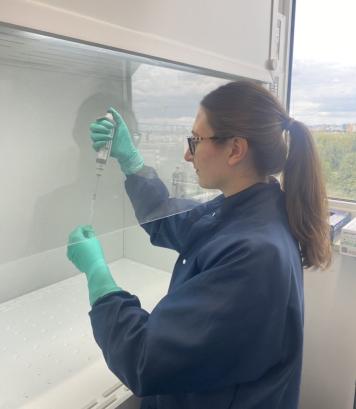
It’s fascinating how much information is hidden inside our bones, even long after we pass. In my PhD research, I study unique ancient burials from the Balearic Islands. By analysing isotopes preserved in cremated and inhumated human remains, we can find out if people moved during their life, and how communities cared for their dead.
Read more about the project here: https://research.flw.ugent.be/en/projects/archaeometric-study-balearic-limeburials-analyzing-enigmatic-funerary-practice-balearic and more of Oriana Chiappa’s Masters research here: https://onlinelibrary.wiley.com/doi/full/10.1002/oa.3393
Clara Zelinksy - Cosmochemist
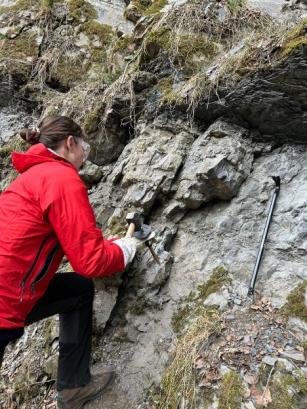
In the FLUX team we are analysing the amount, textural characteristics and chemical composition of cosmic dust particles, especially micrometeorites, to learn more about the dynamics of Earth in the Solar System and the delivery of cosmic dust to Earth over geological timescales. Here we were sampling limestones from the Late Devonian (~ 370 Million years ago) to get insights about the extra-terrestrial dust influx to Earth during that time period. I love the variety of activities that we do throughout the project, from fieldwork and microscopy to chemical analysis and laboratory work. I am fascinated by the cosmic spherules that we work with - to imagine that these tiny particles travelled thousands of years through the Solar System and I can analyse them now, here on Earth - absolutely mind-blowing!
Read more about cosmic dust particles and how Clara Zelinsky and the FLUX project are studying them here: https://researchportal.vub.be/en/projects/flux-tracing-the-flux-of-cosmic-dust-arriving-to-earth-during-the/
Camille Lacorne – Zooarchaeologist
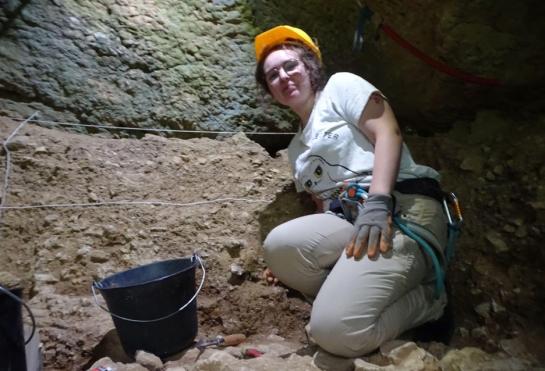
What I love about my work is giving animals a place in the history of humanity by studying how humans, animals, and the environment were connected in the past. 🐠🐖 In my research, animals are not just economic resources. I try to understand where they lived, what they ate, how they interacted with each other, and why they were so important to humans, not only as food. By studying the past in this way, I show that research is about curiosity, asking questions, and seeing the world differently.
Dive into Camille Lacorne's Masters research on massive offerings of marine fish here: https://www.tandfonline.com/doi/full/10.1080/15564894.2024.2397780
Dr Elisavet Stamataki – Bioarchaeologist
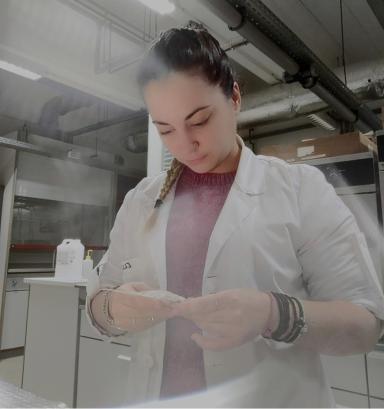
What I love about my research is uncovering how cremation was actually performed in the past, not just that it happened. By combining experimental archaeology with infrared and isotopic analyses of cremated human bone, I study how bone’s structural and chemical composition changes during the burning process and how funerary practices evolved over time. Working with fire, bone, and chemistry allows me to reconstruct moments of the burning process that are otherwise invisible, and to show that even highly transformed remains can still tell detailed human stories.
Read more about Elisavet Stamataki’s research on what happens to bone when its heated here: https://www.sciencedirect.com/science/article/abs/pii/S0272884225033723
Dr Lucy Koster – Bioarchaeologist
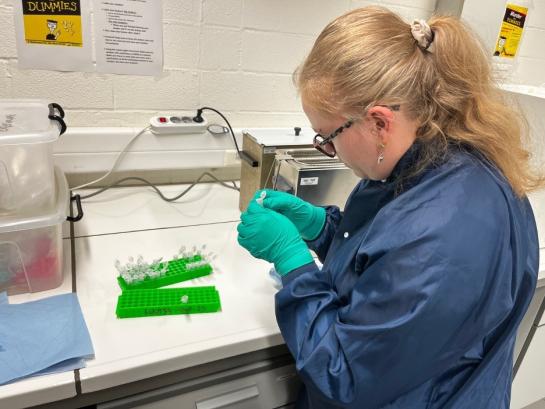
In my research I study the life histories of people in the past, using multiple methods including isotopic analysis, osteology, and anthropology. Currently, I am researching the lives of medieval urban dwellers in Flanders, especially focusing on early life from birth to adolescence, looking at diet, mobility, and health. I love combining multiple methods and the exciting insights we can get from looking at the same problem from lots of different angles!
Follow the Make Up of the Cities Project page to see what exciting research Lucy Koster gets up to! https://www.makeupofthecities.com/team/lucy-koster/
Dr Hannah James - Archaeological scientist
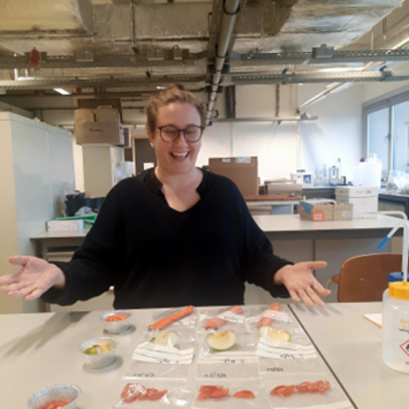
I am fascinated by how traces of diet and mobility are recorded in skeletal tissues, and how scientific analyses of bones and teeth can reveal the choices people and communities made thousands of years ago. My research focuses primarily on understanding past mobility. I am intrigued by questions such as: where did people move from and to? How did they source their food? How did communities interact? To explore these questions, I apply isotopic analysis to cremated bones and teeth and develop large-scale environmental baselines to better understand past human movement.
Want an introduction to the fascinating information stored in our teeth, read Hannah James's outreach paper here: https://kids.frontiersin.org/articles/10.3389/frym.2022.749555