
Seminars with external speakers will be once or twice a month. On other weeks, seminars are held by the internal AMGC researchers, students, and guests.
For more information or to propose speakers, please contact Axel Cerón González, Charlotte Van Riet, Oriana Chiappa, Vendula Smolikova or Maxwell Thiemens who are in charge of the seminar organisation.
PROGRAM 2026-2027
TUESDAY 29 September 2026, 12 PM CET, Room 10G
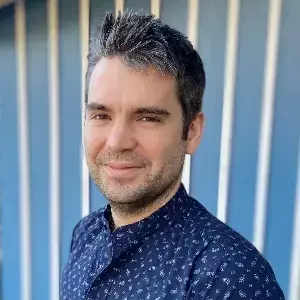
Prof. Dr. Patrick Roberts
Director of the Department of Coevolution of Land Use and Urbanisation at the Max Planck Institute of Geoanthropology
Earth System Archaeology: Rethinking Human-Environment Relationships in the Anthropocene
Humans are changing the Earth’s environment faster and on a larger scale than ever before. Some scientists argue that we have entered a new geological period called the Anthropocene, in which humans have become a major force shaping the Earth. Scientists disagree about when the Anthropocene began and whether it is officially a new geological epoch. However, focusing on one specific starting point can overlook the fact that humans have co-evolved with the Earth over long periods and in different ways across different regions. Archaeology is now in a better position than ever to help us understand these long-term interactions between human activities and Earth’s processes. Yet, this requires archaeologists to view human societies and the Earth as parts of one connected system and systematically combine evidence across time and space.
I call this approach Earth System Archaeology (ESA). In this talk I develop this framework through three areas. First, archaeological science, alongside history and palaeoecology, can generate quantitative datasets that document changing human interactions with the Earth System and help identify shifting environmental baselines. Second, combining archaeological theories of human–environment relationships with Earth System perspectives can provide new ways of understanding co-evolution, feedbacks, and complex interactions between societies and planetary processes. Third, archaeology can adopt, and be integrated within, Earth System modelling, enabling long-term perspectives on interactions between humans, the technosphere, and other Earth System components.
Ultimately, Earth System Archaeology can provide new perspectives on how humans have transformed the planet and how these long-term interactions can help inform the future.
THURSDAY 26 November 2026, 4 PM CET, LIC Learning Theatre

Prof. Dr. Daniel Herwartz
Professor of Sedimentary Geochemistry at the Institute of Geosciences at the Ruhr-University Bochum
Reconstructing paleo-hydrospheres, -atmospheres and -biospheres from biominerals
Biominerals precipitate from the body water of animals. From an Earth system science perspective, animals are part of the biosphere, they drink from the hydrosphere, breathe atmosphere and become part of the geosphere after death. Therefore, the geochemical and isotopic composition of e.g. a dinosaur tooth provides an invaluable time capsule. In this presentation, I will show how triple-oxygen isotopes in a variety of geological archives (including corals, fossil teeth and conodont elements) provide insights into acient environments (paleo-pCO2, paleo-physiology, etc).